

Services
Notary Services
Licensed notarization for the documents that need it, scheduled around your calendar.
What does a notary do?
A notary public is a state-commissioned official who witnesses signatures and verifies identity on legal and financial documents to help prevent fraud. Notary services confirm a document was signed knowingly and willingly by the person named on it.
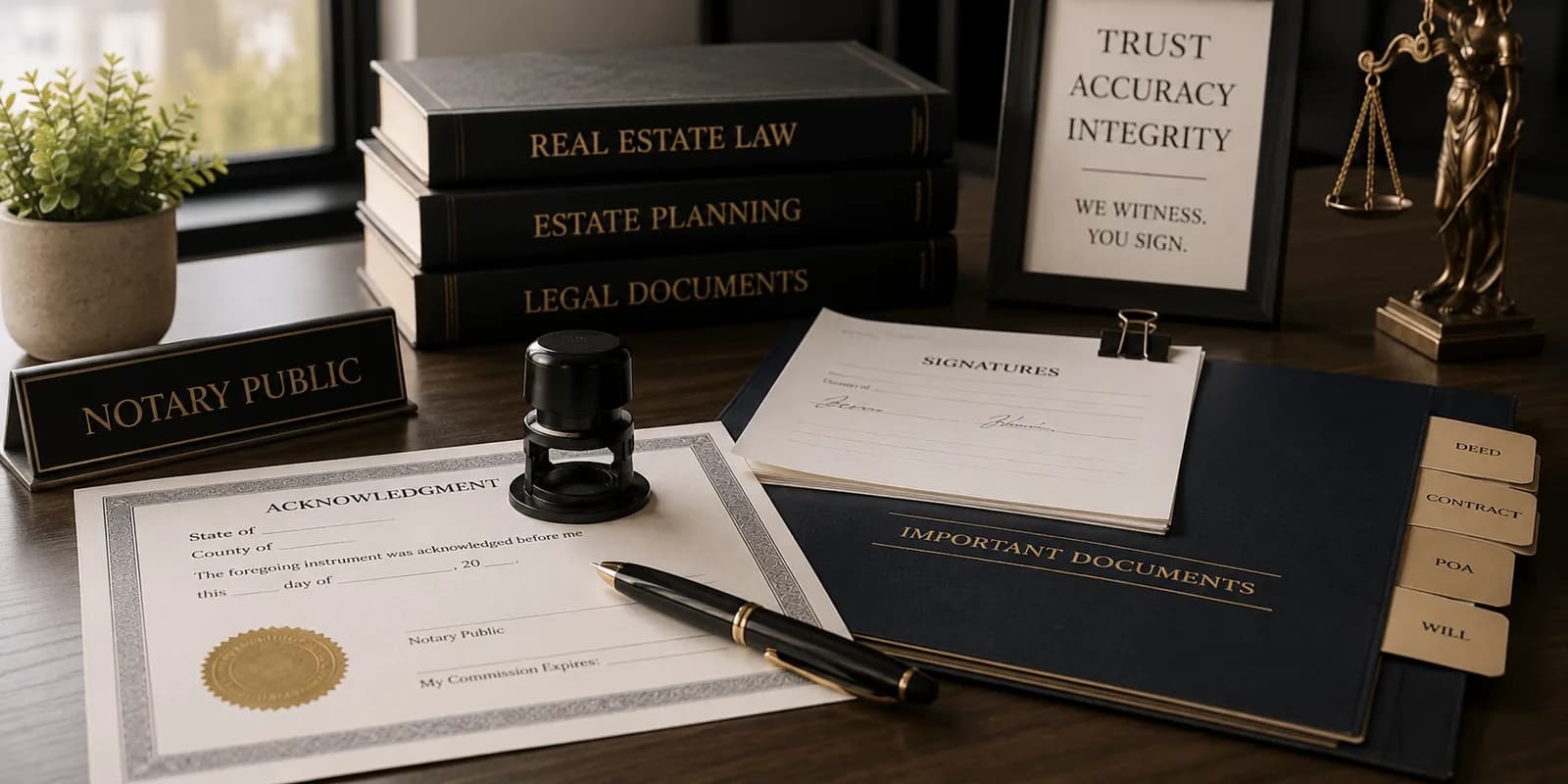
Quick, professional notarization for personal and business documents, scheduled around evening and weekend availability so it doesn't have to compete with your workday.
A notarization typically involves one of a few notarial acts: an acknowledgment, where the signer confirms they signed a document voluntarily, or a jurat, where the signer swears or affirms the contents are true and signs in the notary's presence. Every notarization requires the signer to appear with valid, government-issued photo ID, the notary's role is to verify identity and willingness, not to review or advise on the document's legal content.
What's Included
- Personal & business document notarization
- Evening & weekend availability
- Fast turnaround

How It Works
How notary works

Schedule
An appointment is scheduled around evening or weekend availability.
Bring ID and the document
Bring a valid, government-issued photo ID and the document. Most documents must be signed in the notary's presence, not beforehand.
Verification
Identity is verified and the correct notarial act, an acknowledgment or a jurat, is completed.
Notarization complete
The document is notarized and ready to file or submit.
Common Questions
About notary
Powers of attorney, real estate documents, affidavits, and various personal and business agreements.
Yes, notary services are scheduled around evening and weekend availability. Reach out ahead of time to set a time.
A valid, government-issued photo ID and the unsigned document. Most documents must be signed in the notary's presence, not beforehand.
An acknowledgment confirms the signer voluntarily signed a document and can be signed before the appointment. A jurat requires the signer to swear or affirm the document is true and sign it in the notary's presence.
It depends on the notarial act. Documents requiring a jurat must be signed in the notary's presence. For an acknowledgment, the signer confirms a signature already made, but bringing an unsigned document is the safest default unless told otherwise.
Still have a question about notary?
Send a few details and we'll follow up personally.
Also Explore