

Services
Bookkeeping
Clean, current books all year, so tax season is a formality instead of a scramble.
What is bookkeeping?
Bookkeeping is the ongoing recording of a business's income, expenses, and transactions. Per the IRS, good records help a business monitor its progress, prepare financial statements, identify sources of income, and support what's reported on tax returns.
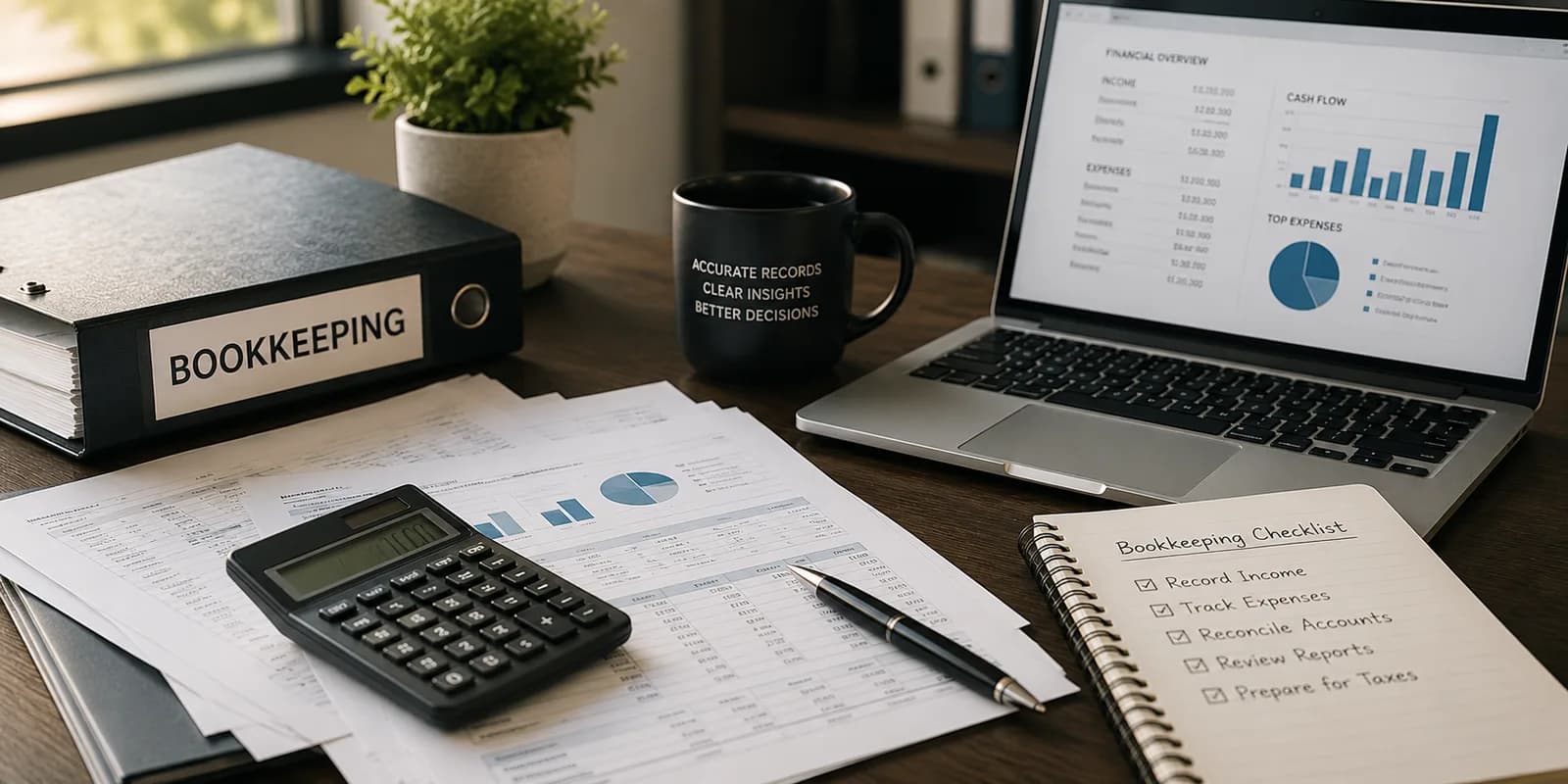
Wright Way Tax keeps your income, expenses, and records organized month to month, so you always know where your business stands and tax time never turns into a scramble to reconstruct a year of receipts.
Bookkeeping generally works on a cash or accrual basis: cash basis records income and expenses when money actually changes hands, while accrual records them when they're earned or incurred. Most small businesses use cash basis for its simplicity, though certain business types and sizes are required to use accrual. Either way, transactions are categorized monthly, reconciled against bank and credit card statements, and rolled into financial statements, a profit and loss statement and a balance sheet, so you can see how the business is actually doing, not just guess.
What's Included
- Monthly income & expense tracking
- Recordkeeping aligned to IRS guidelines
- Financial statements you can actually read
- Audit-ready records, year-round

How It Works
How bookkeeping works

Setup & categorization
Accounts and transaction categories are set up to match how the business actually operates.
Monthly reconciliation
Income and expenses are reconciled against bank and credit card statements every month, not once a year.
Financial statements
A profit and loss statement and balance sheet are prepared so you can see where the business stands at a glance.
Tax-season handoff
Clean, current books mean tax preparation starts from accurate numbers instead of a shoebox of receipts.
Common Questions
About bookkeeping
Monthly at minimum. Reconciling income and expenses against bank statements every month prevents a year-end scramble to reconstruct a year of records.
The IRS says to keep records as long as needed to prove the income or deductions on a tax return. Employment tax records specifically must be kept for at least four years.
Bookkeeping records day-to-day transactions. Accounting and business consulting interpret those records to guide decisions like entity structure or tax planning.
Yes. Even a small or side business benefits from clean monthly records, they make tax season faster and make it possible to actually see how the business is doing.
Cash basis records income and expenses when money changes hands. Accrual records them when they're earned or incurred, regardless of when payment happens. Most small businesses use cash basis for simplicity.
At minimum, a profit and loss statement and a balance sheet. Together they show what the business earned, spent, owns, and owes, current information a business owner needs to make decisions, not just what's needed at tax time.
Still have a question about bookkeeping?
Send a few details and we'll follow up personally.
Also Explore